
Converting real estate leads is no longer about collecting more inquiries but about managing them effectively. A structured Real Estate CRM system helps agents respond faster, organize lead data, personalize communication, and maintain consistent follow-ups.
By reducing manual work and improving coordination, it ensures that every interaction feels timely and relevant. Ultimately, a Real Estate CRM strengthens trust, improves efficiency, and turns potential interest into successful property deals.
In today’s competitive Real Estate market, generating leads is no longer the biggest challenge, converting them is. A well-implemented Real Estate CRM goes far beyond simply storing contact details.
It helps real estate professionals build stronger relationships, ensure timely and consistent follow-ups, and engage prospects at the right moment. By organizing lead data and streamlining communication, it transforms casual inquiries into serious clients.
Table of Contents
- The Real Problem with Real Estate Leads
- What Is a Real Estate CRM (Beyond the Definition)?
- Eliminates Duplicate Data for Cleaner Lead Management
- Faster Response Time = Higher Conversion
- Smart Lead Segmentation That Actually Works
- Automated Follow-Ups That Feel Human
- Personalized Communication Builds Trust
- Lead Scoring Helps Agents Focus on What Matters
- Better Internal Coordination = Better Conversions
- Data-Driven Insights Improve Sales Strategy
- Nurturing Long-Term Leads Without Losing Them
- Reduced Manual Work = More Time to Sell
- Building Professional Credibility Automatically
- Why High-Performing Agents Never Work Without CRM
- Final Thoughts: Conversion Is About Connection
- Frequently Asked Question
The Real Problem with Real Estate Leads
Most real estate businesses believe their conversion rate is low because they “need more leads.” In reality, the issue is often lead mismanagement, not lead quantity.
Common problems include:
- Slow response time
- Missed follow-ups
- Leads falling through the cracks
- No personalization in communication
- Agents forgetting past conversations
When a potential buyer submits an inquiry, they are usually exploring multiple properties and agents at once. If you don’t respond fast, or if your response feels generic, you lose their attention instantly. This is where a Real Estate CRM becomes a silent sales assistant working 24/7.
What Is a Real Estate CRM (Beyond the Definition)?
At its core, a CRM (Customer Relationship Management) system organizes your contacts. But in real estate, it goes much deeper.
A modern Real Estate CRM tracks:
- Lead source (portal, website, social media, referrals)
- Buyer or seller intent
- Property preferences
- Interaction history (calls, emails, site visits)
- Follow-up schedules
- Agent performance
Instead of guessing what a lead wants, you know, and that knowledge dramatically improves conversions.
Eliminates Duplicate Data for Cleaner Lead Management
Duplicate data is a common problem in real estate, especially when leads come from multiple sources such as property portals, websites, social media campaigns, and referrals. A Real Estate CRM automatically detects and merges duplicate entries, ensuring that each lead has a single, accurate profile.
- Leads are instantly captured from multiple sources such as websites, portals, and social media in one centralized system.
- Notifications alert agents immediately, ensuring no inquiry goes unnoticed or delayed.
- Automated responses engage the lead even before manual follow-up, setting the right first impression.
- Follow-up reminders prevent agents from forgetting callbacks or messages.
This immediate and organized engagement reassures the lead that they are dealing with a professional, responsive agent, significantly increasing trust and the chances of conversion.
Faster Response Time = Higher Conversion
Studies consistently show that leads contacted within the first 5 minutes are far more likely to convert than those contacted later. Yet many agents respond hours, or even days, after receiving an inquiry.
With a Real Estate CRM, response time improves because:
- Leads are instantly captured
- Notifications alert agents immediately
- Automated responses engage the lead even before manual follow-up
This immediate engagement reassures the lead that they are dealing with a professional, responsive agent, not someone who might forget them.
Smart Lead Segmentation That Actually Works
Not every lead is the same. Some are ready to buy, some are just browsing, and others may take months to decide. Treating all leads the same is a major conversion killer.
A Real Estate CRM allows you to segment leads based on:
- Budget range
- Property type (apartment, villa, plot, commercial)
- Buying timeline
- Location interest
- Engagement level
When leads receive communication that matches their intent, they feel understood, and understood leads convert faster.
Automated Follow-Ups That Feel Human
One of the biggest reasons leads go cold is inconsistent follow-up. Agents get busy with site visits, paperwork, and negotiations, and follow-ups slip through the cracks.
A powerful Real Estate CRM automates follow-ups while keeping them personal:
- Scheduled emails and WhatsApp messages
- Reminder alerts for calls
- Property recommendations based on past interest
- Drip campaigns that nurture long-term leads
Instead of chasing leads manually, the system ensures no opportunity is forgotten, allowing agents to focus more on meaningful conversations and closing deals rather than administrative tasks.
Personalized Communication Builds Trust
Today’s buyers expect personalization. They don’t want generic messages like “We have many great properties for you.”
Using a Real Estate CRM, you can:
- Reference previous conversations
- Share properties matching exact preferences
- Address leads by name
- Follow up with relevant content
When communication feels personal, leads are more likely to reply, engage, and eventually convert.
Lead Scoring Helps Agents Focus on What Matters
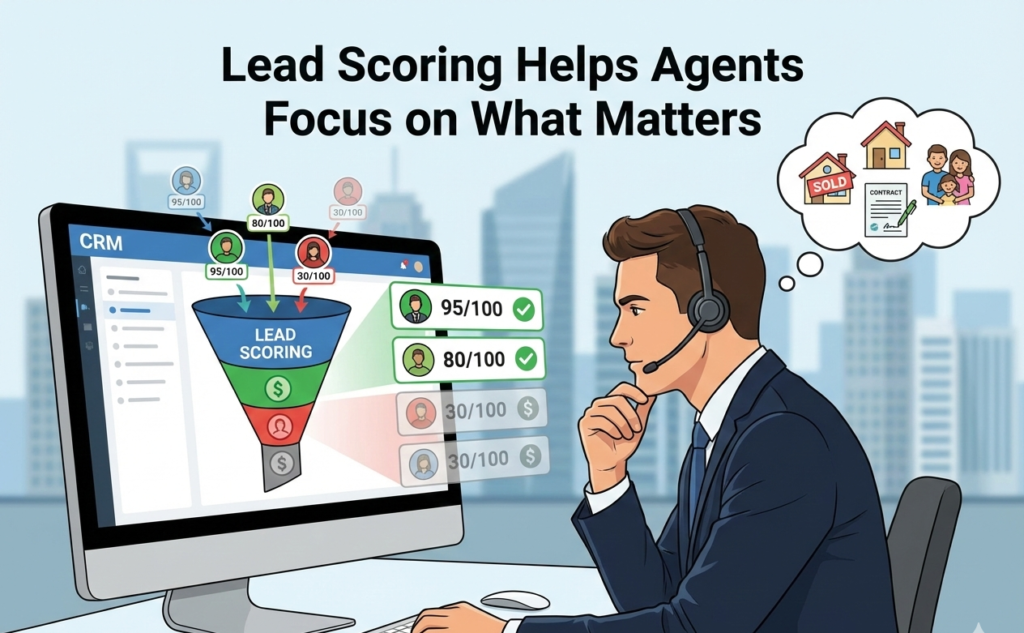
Not all leads deserve the same amount of time and energy. Some are highly motivated, while others may never convert.
A Real Estate CRM uses lead scoring to identify:
- High-intent leads
- Frequently engaged prospects
- Ready-to-close buyers
- Long-term nurture leads
This helps agents prioritize wisely, spending maximum effort where conversion chances are highest.3
Better Internal Coordination = Better Conversions
In real estate teams, leads often pass between sales executives, channel partners, and managers. Without proper tracking, communication gaps arise.
With a Real Estate CRM, teams benefit from:
- Centralized lead data
- Clear ownership assignment
- Transparent activity logs
- Performance tracking
When teams are aligned, leads receive consistent communication, building confidence and reducing drop-offs.
Data-Driven Insights Improve Sales Strategy
Gut feelings don’t scale. Data does, because real decisions need clear insights into what works, what doesn’t, and where conversions are actually happening.
A Real Estate CRM provides insights such as:
- Which lead sources convert best
- Which follow-up methods work
- Average conversion time
- Drop-off points in the sales funnel
These insights help refine marketing campaigns, improve scripts, and focus budgets where they generate the highest ROI.
Nurturing Long-Term Leads Without Losing Them
Not every lead is ready to buy today. But many will buy in the future, if you stay connected.
Using a Real Estate CRM, agents can:
- Educate leads with regular updates
- Share market trends
- Send festival or milestone messages
- Stay top-of-mind without being pushy
This long-term nurturing quietly increases conversion rates over time, as consistent, value-driven communication keeps your brand top-of-mind until the buyer is ready to make a decision.
Reduced Manual Work = More Time to Sell
Agents often spend hours managing spreadsheets, notes, and reminders. This reduces the time they could spend building relationships or closing deals.
A Real Estate CRM automates repetitive tasks, allowing agents to:
- Focus on conversations, not data entry
- Spend more time on site visits
- Close deals faster
Efficiency directly impacts conversion success, because faster responses and organized follow-ups leave less room for missed opportunities or lost leads.
Building Professional Credibility Automatically
From the lead’s perspective, professionalism matters. Consistent communication, quick responses, and organized follow-ups create confidence.
When powered by a Real Estate CRM, your brand appears:
- Reliable
- Responsive
- Organized
- Client-focused
Trust is one of the strongest conversion drivers in real estate, and CRM systems help build it silently.
Why High-Performing Agents Never Work Without CRM
Top-performing agents don’t rely on memory or manual tracking. They rely on systems.
A Real Estate CRM gives them:
- Predictability in sales
- Control over their pipeline
- Visibility into future revenue
- Confidence that no lead is wasted
That’s why agents who adopt CRM systems consistently outperform those who don’t.
Final Thoughts: Conversion Is About Connection
Lead conversion isn’t about pressure, it’s about timing, relevance, and trust. A CRM doesn’t replace human interaction; it enhances it.
By using a Real Estate CRM strategically, you transform scattered inquiries into structured relationships, random follow-ups into meaningful conversations, and missed opportunities into closed deals.
A Real Estate CRM helps maintain this balance by ensuring every interaction is informed, timely, and relevant. Ultimately, successful lead conversion happens when prospects feel understood rather than sold to.
Frequently Asked Question
What is a Real Estate CRM and why is it important for agents?
It is a system that helps agents manage inquiries, track interactions, and follow up consistently, ensuring no potential client is overlooked during the sales process.
How does this software improve lead conversion rates?
A Real Estate CRM improves conversions by enabling faster responses, organized follow-ups, personalized communication, and better visibility into each lead’s journey.
Why do many real estate leads fail to convert?
Most leads fail due to delayed responses, missed follow-ups, lack of personalization, and poor tracking rather than a shortage of inquiries.
Can a Real Estate CRM help agents respond faster to inquiries?
Yes, it captures leads instantly, sends real-time alerts, and allows automated replies so prospects receive immediate engagement.
How does lead segmentation help close more deals?
Segmentation allows agents to tailor communication based on budget, intent, and timeline, making messages more relevant and increasing engagement.
Does a Real Estate CRM make follow-ups feel automated or impersonal?
No, when used correctly, it supports personalized messages based on previous interactions, keeping communication timely yet human.
How does better internal coordination improve conversions?
When teams share centralized data and clear lead ownership, prospects receive consistent communication, which builds trust and reduces drop-offs.
Can a Real Estate CRM help nurture long-term prospects?
Yes, it supports structured nurturing through reminders, updates, and meaningful touchpoints until the prospect is ready to buy.
Does automation reduce the workload for real estate agents?
Automation reduces repetitive tasks like data entry and reminders, giving agents more time to focus on conversations, site visits, and closing deals.
Why do high-performing agents rely on Real Estate CRM systems?
Because these systems provide clarity, consistency, and control over the sales pipeline, ensuring no opportunity is missed and performance remains predictable.