

This blog highlights the best CRM for real estate agents in 2026 and how it helps manage leads and close deals faster. It compares popular CRM tools and explains key features like WhatsApp automation and lead tracking. The guide helps agents choose the right CRM based on their business needs and growth plans.
The real estate industry has changed dramatically in recent years. Buyers are more informed, sellers expect faster updates, and leads now come from multiple digital channels like WhatsApp, social media, and real estate portals. In this fast-moving environment, relying on spreadsheets, manual reminders, and unorganized follow-ups no longer works.
To stay competitive in 2026, real estate agents need a dedicated CRM for real estate agents that streamlines workflows, strengthens client relationships, and helps close deals faster. More than just a tool, a modern CRM centralizes client interactions, tracks every lead from inquiry to closing, and keeps agents organized even during peak seasons.
In this blog, you’ll find a comprehensive guide to the top real estate CRMs in 2026, including features, benefits, pricing, comparisons, and expert recommendations. The goal is simple: to help you choose a CRM that not only supports your business but accelerates it.
Table of Contents
Real Estate CRM Market Trends for 2026–2027
The demand for smarter, faster, and AI-driven CRMs is rising as real estate processes become more digital. Here are the trends shaping the future:
1. AI-Powered Lead Scoring Is Becoming Standard
Real estate agents deal with hundreds of leads, but not all are ready to buy. CRMs now analyze user behavior, inquiry details, property interests, and interaction history to identify high-potential leads. This saves time, improves conversion rates, and ensures that agents focus on prospects who are most likely to close.
2. WhatsApp Is Becoming the Primary Sales Channel
With 90% of communication happening on WhatsApp, CRMs in 2026 offer advanced WhatsApp automation, including quick replies, follow-up reminders, broadcast messages, and property brochures. Agents who use WhatsApp CRM can respond instantly and convert leads before competitors even call back.
3. Predictive Analytics Is Transforming Real Estate Sales
CRMs now forecast deal probability, ideal follow-up times, and potential risks. This helps agents stay proactive and avoid losing leads due to delayed responses or poor timing.
4. Mobile-First CRM Experience Is Crucial
Agents are constantly on the move, and a CRM for Real Estate Agents with powerful mobile apps offering reminders, client notes, call tracking, location-based features, and instant property sharing has become essential.
5. VR & 3D Tour Integrations Are On the Rise
As more buyers prefer virtual tours before site visits, CRMs are integrating 3D viewing options. This helps agents showcase properties efficiently and qualify buyers more accurately.
These trends make one thing clear: a CRM for real estate agents is no longer just software, it’s a complete ecosystem designed to help agents scale faster than ever.
Why Real Estate Agents Need CRM in 2026
Real estate is a relationship-driven business, and CRM brings structure, speed, and efficiency to every interaction. Here’s how it benefits agents:
- Faster Follow-Ups and Zero Missed Opportunities
Most missed deals happen because agents forget to follow up at the right time. A CRM solves this through automated reminders, smart notifications, and AI-based suggestions. Whether it’s a property inquiry or a site visit confirmation, you never miss an important update.
- Higher Lead Conversion Through Automation
CRMs help agents send personalized communication based on lead behavior. From automated WhatsApp messages to scheduled emails, every buyer and seller receives timely responses, boosting trust and conversion.
- Organized Deal Pipelines
Instead of guessing where each lead stands, agents see a clear visual pipeline with every stage:
Inquiry → Follow-Up → Site Visit → Negotiation → Closing
This transparency helps in planning daily tasks more effectively.
- Centralized Lead Management
All leads from portals, social media, websites, WhatsApp, and referrals come into one system. This saves hours of manual entry and reduces the chance of losing leads.
- Better Team Collaboration
For teams and brokerages, CRMs assign leads, track performance, and share updates. Managers can monitor progress, identify bottlenecks, and ensure smooth communication.
Simply put, CRM helps agents work smarter, close deals faster, and build long-term relationships with clients.
Top CRM for Real Estate Agents in 2026
Below is a deeply detailed breakdown of the best CRMs for real estate professionals this year.
1. PropertyCRM
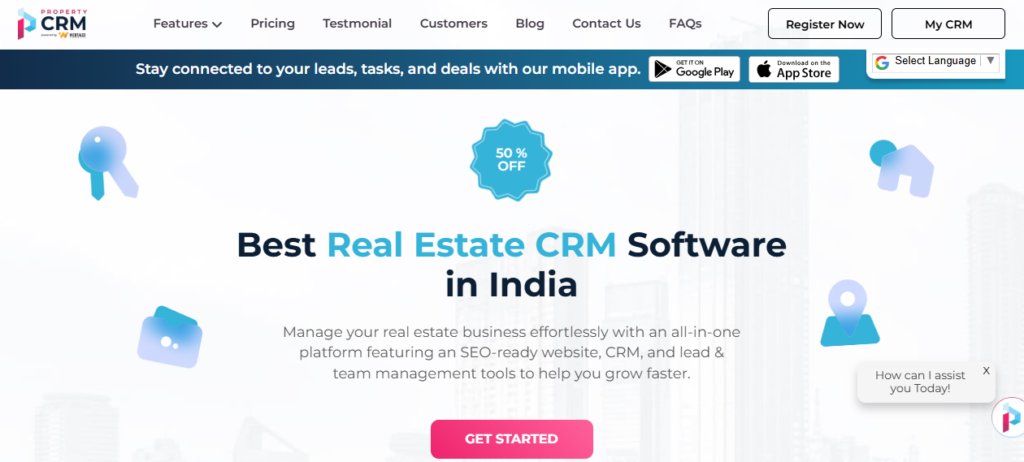
Best For: Real estate agents, teams, and property developers
PropertyCRM is designed specifically for real estate workflows. It combines lead management, automation, property marketing, team performance, and closing tools into one seamless platform.
Key Features
- Automated lead capture from portals (99acres, MagicBricks, Housing, Facebook, etc.)
- SEO-enabled dynamic website for real estate brokers
- WhatsApp Business integration for instant replies
- Project & Property inventory management & sharing
- Bulk lead assignment to sales teams
- Team management with role-based access
- Site visit scheduling with automated reminders
- Task assignment, lead tracking, reports & performance insights
- Mobile-first CRM for agents on the move
Prices start from 250 Rs/month (Affordable plans for Individuals, small, medium, and large teams).
Why Agents Love It: Because it offers everything needed to manage leads, properties, and deals in one place without technical complications. It’s built for real estate, not generic sales.
2. Zoho CRM
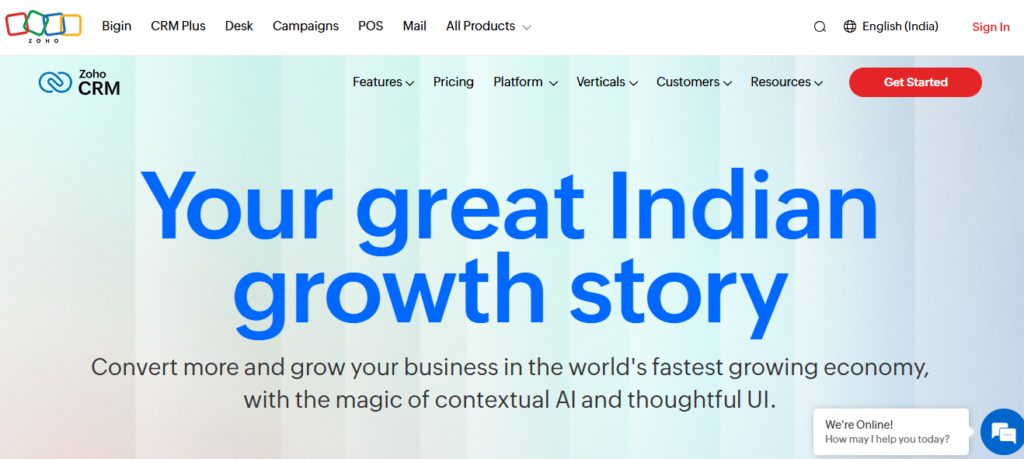
Best For: Small teams and startups
Zoho offers flexibility and a wide range of integrations. It’s a reliable option for agents who want a customizable tool without high costs.
Key Features
- Lead scoring
- Email/SMS automation
- Social media integrations
- Dashboard reporting
- Custom pipelines
Pricing: Starts from 800 Rs/month, with a free tier for basic features
Why Agents Love It: Budget-friendly and ideal for beginners looking for structured operations.
3. Salesforce Real Estate Cloud
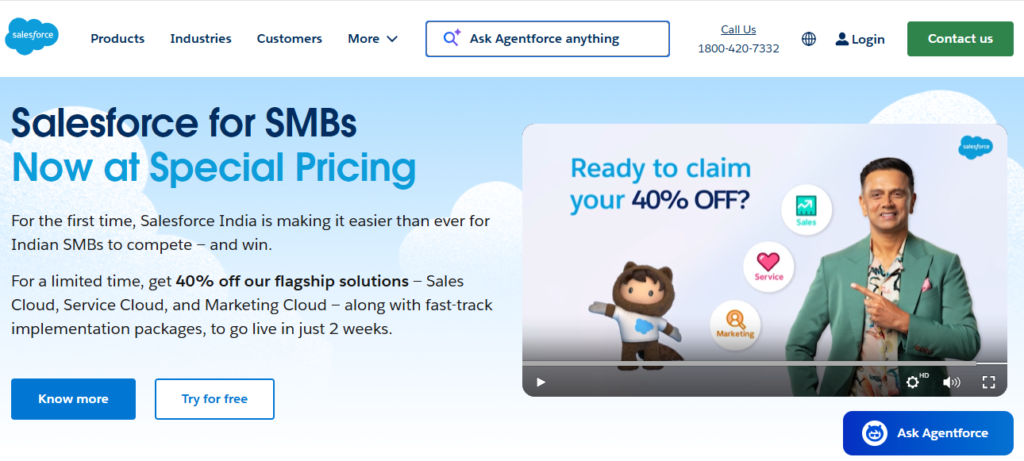
Best For: Enterprises and large brokerages
Salesforce is powerful, customizable, and enterprise-focused. It is ideal for businesses that want extensive customization and automation at scale.
Key Features
- AI-driven insights
- Complex workflow automation
- Multi-team collaboration
- Advanced analytics
- High-volume lead management
Pricing: Starts at $25/user/month, with additional enterprise plans depending on customization
Why Agents Love It: Premium-priced but unmatched in scalability and advanced features.
4. HubSpot CRM

Best For: Solo agents and beginners
HubSpot is known for its simplicity and free plan. It’s suitable for agents who want basic CRM functionalities without heavy features.
Key Features
- Pipeline visualization
- Email tracking
- Contact management
- Notes and tasks
- Free plan with essential tools
Pricing: Starts 835 Rs/user/month
Why Agents Love It: Helps new agents switch from spreadsheets to organized CRM operations smoothly.
5. Freshsales CRM (Freshworks)
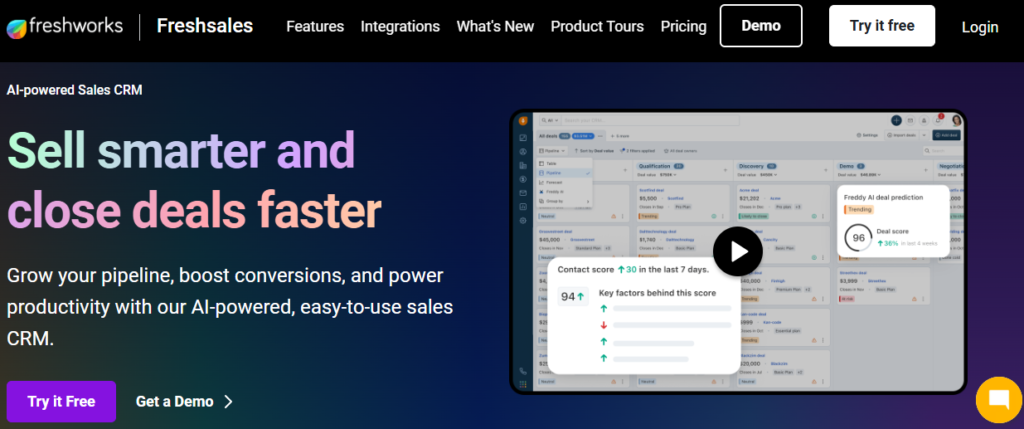
Best For: Teams that prioritize automation
Freshsales focuses on ease of use and automation, making it ideal for agents who want to simplify their sales cycle.
Key Features
- Lead scoring
- Match-and-merge tools
- Smart workflows
- Contact tracking
- Chatbot options
Pricing: Starts at ₹749/user/month, mid-range plans for automation-focused teams
Why Agents Love It: Modern, fast, and perfect for tech-savvy real estate teams.
Comparison Table: Best CRM for Real Estate Agents in 2026
| CRM | Ideal For | Pricing | Unique Feature | Rating |
| PropertyCRM | Real estate teams | Affordable | WhatsApp automation + property inventory | ⭐⭐⭐⭐⭐ |
| Zoho CRM | Small teams | Budget-friendly | Lead scoring | ⭐⭐⭐⭐ |
| Salesforce | Enterprises | Premium | AI insights + customization | ⭐⭐⭐⭐⭐ |
| HubSpot | Beginners | Free | Clean, simple pipelines | ⭐⭐⭐⭐ |
| Freshsales | Automation-focused teams | Mid-range | Smart workflows | ⭐⭐⭐⭐ |
Real Estate CRM Workflow: How It Works from Start to Finish
A CRM streamlines every step of the agent’s journey.
1. Lead Capture
Leads automatically enter the CRM from:
- Real estate portals
- Social media
- Website forms
- Offline campaigns
No manual entry needed.
2. Lead Distribution
Agents receive leads instantly based on availability or specialization.
3. Lead Scoring
AI identifies hot leads, saving time and improving conversions.
4. Follow-Up Automation
CRM sends reminders, automated emails, and WhatsApp templates.
5. Property Sharing & Brochures
Agents can quickly send brochures, photos, videos, and documents.
6. Site Visit Scheduling
Calendar-based bookings reduce no-shows and confusion.
7. Negotiation Tracking
Notes, call logs, and tasks keep negotiations clear and organized.
8. Closing
Documents, payments, and agreements stay centralized.
9. Post-Sale Relationship
CRM helps agents maintain long-term relationships for referrals.
Who Should Use Which CRM?
Solo Agents
Need: Simplicity + affordability
Choose: HubSpot, Zoho
Small Teams
Need: Tracking + reminders
Choose: Zoho, PropertyCRM
Brokerages
Need: Automation + performance insights
Choose: PropertyCRM, Salesforce
Luxury Agents
Need: Client profiling + personalized follow-ups
Choose: Salesforce, PropertyCRM
Rental Agents
Need: Fast communication
Choose: PropertyCRM (WhatsApp automation)
Integrations That Matter in 2026
Choosing a CRM with these integrations ensures smooth workflows:
- Email providers
- Property portals
- Calendar
- Payment gateways
- Digital signatures
- Marketing tools
Agents save hours every day with connected systems.
Mistakes to Avoid When Choosing a CRM
Many agents regret choosing the wrong CRM. Avoid these mistakes:
- Choosing only the cheapest option
- Ignoring WhatsApp integration
- Selecting a CRM with no mobile app
- Not checking automation features
- Not training team members
- Using multiple tools instead of one system
A CRM for Real Estate Agents should simplify your business, not complicate it. The right Real Estate CRM Software gives agents the power to manage leads, automate follow-ups, strengthen client relationships, and operate with complete clarity.
Final Recommendation
A great CRM for real estate agents in 2026 should improve follow-ups, simplify lead management, support WhatsApp, and give clear pipelines. Based on overall features and usability:
🥇 Best All-in-One CRM for Real Estate Agents: PropertyCRM
🥈 Best Budget CRM: Zoho
🥉 Best Free CRM: HubSpot
⭐ Best for Enterprises: Salesforce
⭐ Best for Automation: Freshsales
Choosing the right CRM for Real Estate Agents is choosing growth. With the right system, you get more clarity, faster deals, stronger relationships, and higher revenue everything a modern real estate business needs.
Frequently Asked Questions
What is a CRM for Real Estate Agents?
A CRM for Real Estate Agents is a specialized software that helps agents manage leads, track follow-ups, organize property listings, schedule site visits, and close deals efficiently. It centralizes all client interactions in one system for better productivity.
How is a CRM for real estate brokers different from a general CRM?
A CRM for real estate brokers is built specifically for property workflows, including inventory management, site visit scheduling, portal lead capture, and WhatsApp communication. General CRMs lack these real estate-specific features.
Why do Real Estate Agents need a CRM in 2026?
In 2026, leads come from multiple digital channels like WhatsApp, portals, and social media. A CRM for Real Estate Agents automates follow-ups, tracks every inquiry, and ensures no opportunity is missed, helping agents close deals faster.
Which CRM is best for Real Estate Agents in 2026?
The best CRM depends on business size and needs. Platforms like PropertyCRM are ideal for agents and brokers who want WhatsApp automation, lead tracking, and property inventory in one system, while Zoho and HubSpot suit smaller teams.
Can a CRM for real estate brokers help increase lead conversion?
Yes. A CRM for real estate brokers improves lead conversion through automated follow-ups, lead scoring, reminders, and timely communication, ensuring agents engage prospects at the right time.
Is WhatsApp integration important in a CRM for Real Estate Agents?
Absolutely. WhatsApp is the primary communication channel for buyers. A CRM for Real Estate Agents with WhatsApp integration enables instant replies, automated messages, and brochure sharing, helping agents respond faster than competitors.
Can solo agents use a CRM, or is it only for teams?
Solo agents can definitely benefit. A CRM for Real Estate Agents helps individuals stay organized, manage leads, schedule follow-ups, and grow without needing a large team.
What features should a CRM for real estate brokers have in 2026?
A modern CRM for real estate brokers should include lead automation, WhatsApp integration, mobile app access, property inventory management, site visit scheduling, reporting, and AI-based lead insights.
Is a mobile app necessary in a CRM for Real Estate Agents?
Yes. Since agents work on the move, a CRM for Real Estate Agents with a mobile app allows access to leads, tasks, follow-ups, and client notes anytime, anywhere.
How do I choose the right CRM for Real Estate Agents?
Choose a CRM for Real Estate Agents based on your business size, budget, lead volume, WhatsApp needs, and automation requirements. Always test the demo and ensure it simplifies your workflow instead of adding complexity.